Health and Safety Policy for Landscaping Thamesmead
 Landscaping Thamesmead services must be delivered with a clear commitment to health and safety, protecting employees, clients, visitors, contractors, and the public. This policy sets out the principles that guide safe working practices across all landscaping activities, from soft landscaping and grounds maintenance to planting, turfing, pruning, and the handling of tools and materials. Our aim is to create safe, well-managed working conditions that reduce risk and support consistent quality.
The company recognises that landscaping work can involve physical strain, moving machinery, manual handling, slips, trips, sharp tools, weather exposure, and changing site conditions. For that reason, every landscaping project is planned with safety in mind. A proactive risk management approach is used to identify hazards before work begins and to ensure suitable controls are in place throughout the job. This includes proper supervision, safe systems of work, and clear communication between team members.
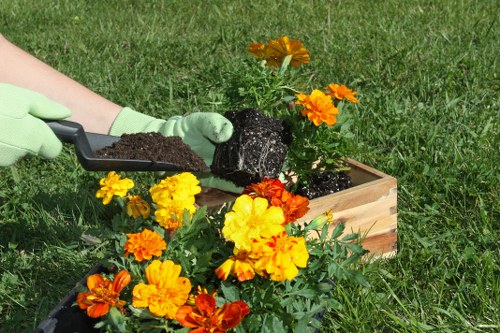 Health and safety responsibilities apply to everyone involved in the work. Managers must provide suitable resources, training, and oversight. Supervisors must check that equipment is used correctly and that work areas remain safe. Employees must follow instructions, use protective equipment, and report hazards immediately. In this way, landscaping safety becomes part of everyday working practice rather than an afterthought.
Safe equipment use is central to this policy. All tools, machines, and vehicles used in Thamesmead landscaping operations must be maintained in good working order and inspected regularly. Defective equipment must be removed from use until repaired or replaced. Where powered tools are needed, only trained and authorised personnel may operate them. Personal protective equipment, such as gloves, eye protection, hearing protection, high-visibility clothing, and safety footwear, must be worn whenever the task requires it.
Manual handling is another key area of concern. Landscaping often involves lifting bags of soil, moving stones, carrying plants, and handling awkward or heavy materials. To reduce the risk of injury, loads should be assessed before lifting, team lifts should be used where appropriate, and mechanical aids should be introduced whenever possible. Workers must be encouraged to pause and plan before attempting any strenuous movement. This approach helps lower the chance of back strain, muscular injury, and fatigue.
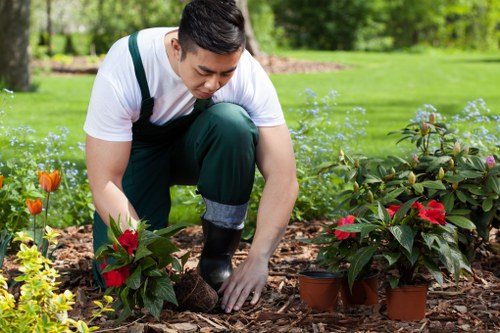 Weather conditions can also affect safe working. Heat, cold, rain, wind, and poor visibility may change the level of risk on site. In warm conditions, drinking water, shade, and rest breaks should be provided. In cold or wet conditions, suitable clothing and slip-resistant footwear are essential. If weather makes work unsafe, activities must be delayed or adjusted. A flexible approach protects both workers and the quality of landscaping services in Thamesmead.
Site safety checks must be completed before work begins and updated during the day if conditions change. These checks should consider ground stability, access routes, overhead hazards, hidden services, traffic movement, and the presence of members of the public. Where needed, barriers, warning signs, and controlled work zones should be used to keep people away from active work areas. Good housekeeping is also important; tools, waste, and materials should be stored neatly to prevent trips and falls.
Training is a vital part of maintaining safe standards. Every worker should receive instruction relevant to their role, including safe tool handling, manual handling techniques, emergency procedures, and the correct use of protective equipment. New staff and temporary workers must be inducted before starting work. Refresher training should be provided when equipment changes, procedures are updated, or incidents reveal a need for improvement. A well-trained landscaping team is more capable of spotting risks and responding calmly.
Incident reporting must be taken seriously. Any accident, near miss, damage, or unsafe condition should be reported promptly so that the issue can be investigated and appropriate action taken. Records help identify patterns, improve controls, and reduce the chance of recurrence. Learning from incidents is an important part of developing a safer working culture and strengthening confidence across all landscaping projects.
 Emergency arrangements must be understood by everyone on site. First aid supplies should be available, and at least one competent person should be able to respond to injuries until further help arrives. Workers must know what to do in the event of fire, severe weather, chemical exposure, or utility damage. Clear procedures reduce confusion and help ensure that urgent situations are handled quickly and effectively.
Environmental care also supports health and safety. Waste, fuel, oils, and other materials must be stored and disposed of responsibly. Spills should be contained and cleaned immediately to avoid slips or environmental harm. When using fertilisers, treatments, or other substances, instructions must be followed carefully, and safe storage must be maintained. Responsible landscaping practice protects both people and the surrounding area.
 This policy is reviewed regularly to ensure it remains suitable, effective, and up to date. Reviews may be triggered by changes in operations, equipment, staffing, legislation, or lessons learned from incidents. Through continuous improvement and consistent supervision, landscaping Thamesmead services can be delivered safely, professionally, and with respect for everyone affected by the work.